
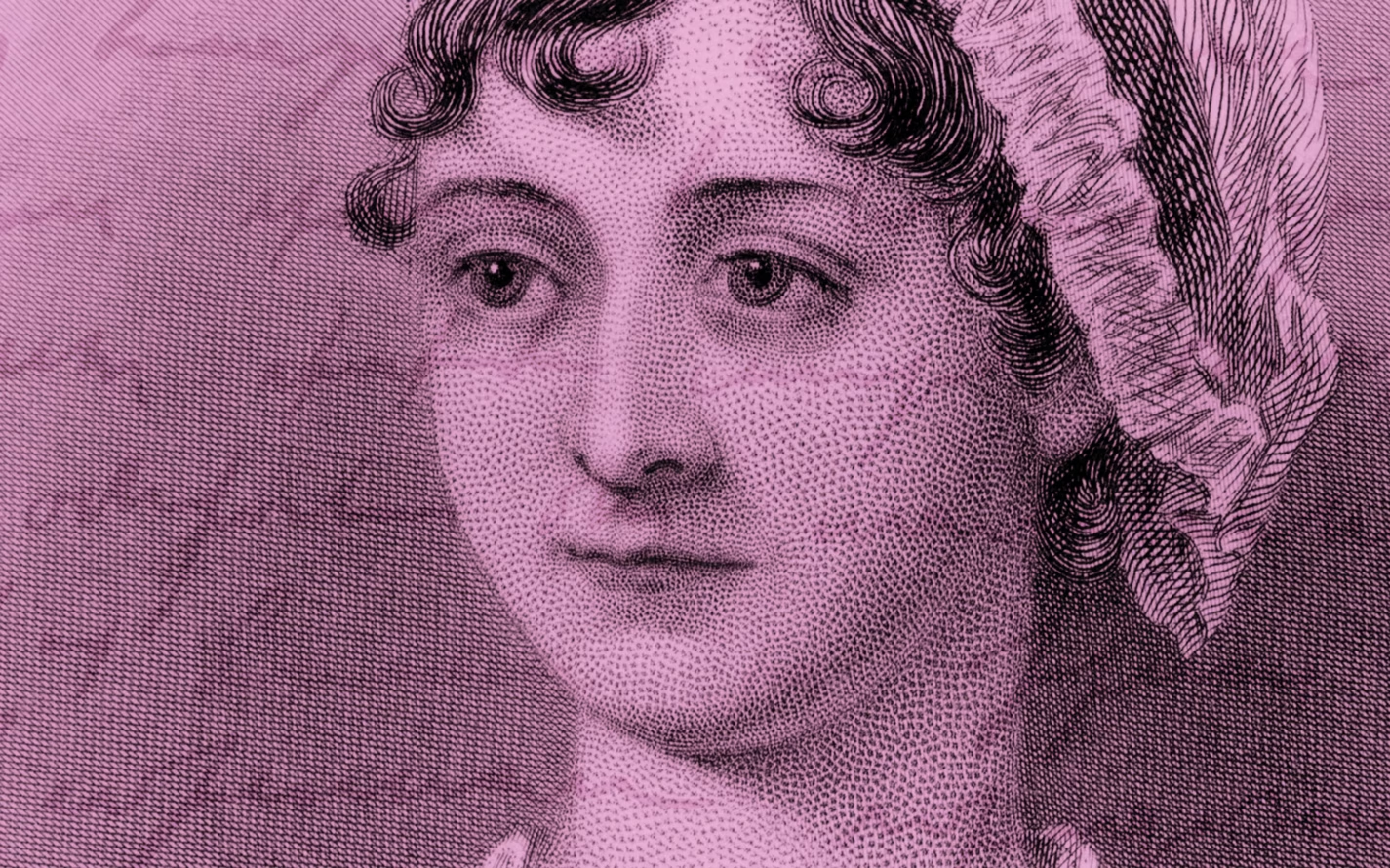
In 2025 (the 250th anniversary of Jane Austen’s birth) Rebecca Romney published a book called “Jane Austen’s Bookshelf: the women writers who shaped a legend” (available to borrow from the library Ca 15328 ). Its focus is 8 popular women writers born in the 18th Century who have since fallen into relative obscurity, leaving Jane Austen perceived by many to be the first successful English woman novelist, or even the only woman writing in 18th and early 19th Century. This is far from the truth, and much of the book explores the decline in popularity of these 8 writers (for reasons including literary fashion, literary sexism, and moral objections to either author or content).
Romney outlines the lives and literary achievements of Frances Burney (1752-1840), Ann Radcliffe (1764-1823), Charlotte Lennox (c.1729-1804), Hannah More (1745-1833), Charlotte Smith (1749-1806), Elizabeth Inchbald (1753-1821), Hester Lynch Thrale Piozzi (1741-1821) and Maria Edgeworth (1768-1849).
We know from her letters and novels that Jane Austen read works by all these writers. Several of their books are mentioned by name in Northanger Abbey (including Camilla (1796) and Cecilia (1782) by Burney, and Belinda (1801) by Edgeworth, as well as multiple references to The Mysteries of Udolpho by Ann Radcliffe). As a measure of popularity, Ann Radcliffe was paid £500 for Udolpho in 1794, while Jane Austen received £10 in 1803 for Susan (later published as Northanger Abbey) and £140 for Sense and Sensibility in 1811.
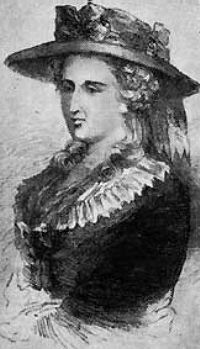
Imagined portrait of Ann Radcliffe, published after her death.
This interesting book by Romney prompted me to wonder if the library held any (or indeed all?) of these women’s books. It didn’t seem impossible, not least because Bromley House Library allowed women as full voting members from its opening in 1816 (the year before Jane Austen’s death), by which time all of these were established authors.
I searched the catalogue for their books. We have many of the most well known, read and referenced by Jane Austen. Most of the editions held in the library are from the series “British Novelists” published in 1820 (3 years after her death).
I’d never heard of Elizabeth Inchbald, but was fascinated to learn she wrote Lovers’ Vows, the play performed in Mansfield Park which caused such moral debate within the family. Sadly, Bromley House doesn’t have this in stock, though I found it online, and finally understood better Sir Thomas’s objections in the book to the choice of play, given the moralities of the time and the importance of unmarried daughters presenting a virtuous and innocent public face to the world of society. (It features an affair, an illegitimate child brought up by a single abandoned mother, and the successful resistance of a young woman to accepting the suitor commended by her family, fighting instead for a love match with a penniless clergyman. Although the moral order is partially restored by the late marriage of the previously parted lovers, the young woman is still allowed to make her own choice – something we know Jane Austen supported strongly.)
Like Inchbald, most of the writers featured by Romney set up far more dramatic storylines and more threatening scenarios for their characters than Austen does. It is well known she described her own work as “the little bit (two inches wide) of ivory on which I work with so fine a brush, as produces little effect after much labour” but I’d not fully understood till I followed up these writers just how much more narrowly focused and domestic her work was even than the contemporary/recent works she was reading for pleasure.
For example, Evelina (the eponymous central character of the 1778 novel by Burney) is a beautiful young woman brought into London society with complete ignorance as to its conventions, and innocence as to the intentions of the people she meets. There are many comical moments as she misunderstands or misjudges social situations (aggravated by the time lag in the epistolatory novel between her written requests to her guardian for advice and its arrival- often too late to guide her behaviour!) But there are also far more direct threats to her, including predatory men attempting to trick and seduce her. More aggressive still are the repeated attempts in Udolpho to coerce the central figure Emily into marriage against her will, to disinherit her, to seduce her, and even to kidnap her into forced marriage. If Austen had followed these examples we might have been focusing more on Georgina Darcy, saved at the last moment from seduction by Wickham, than on Elizabeth; or on seeing life from Harriet or Jane Fairfax’s viewpoints in Emma….
Jane Austen’s plots are less dramatic and also less complex than some of the labyrinthine twists and turns favoured by her role models, like Radcliffe in Udolpho. The settings are domestic not international, small scale, and with much of the drama taking place within or between local family groups.
Her humour is also more subtle, with irony featured more than huge comic episodes. Female Quixotte (1752) is a comic novel by Charlotte Lennox featuring a main character (Arabella) whose world view has been formed from reading romantic and gothic novels, leading her to make ludicrous and erroneous assumptions about the motives and reactions of everyone she meets. Lennox creates a comic tale of misunderstanding while satirizing the view – prevalent at the time – that young women were too morally weak and intellectually challenged to be able to read novels without being corrupted by them. Arabella is a deliberately extreme example of this view, indirectly making the case that women are well able to distinguish between fiction and real life. We know Jane Austen enjoyed this book so much she read it at least twice, writing to her sister, “Female Quixotte [sic] [..] now makes our evening amusement; to me a very high one, as I find the work quite equal to what I remembered it.”
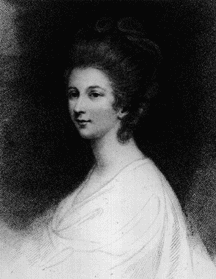
Charlotte Lennox.
Engraving by Francesco Bartolozzi after Sir Joshua Reynolds, 1793.
Northanger Abbey is the Jane Austen take on this, showing how the young protagonist Catherine’s reading of horror stories (and especially Udolpho) leads her to see imagined danger and dark threats in the Tilney family and home. Unlike Emily in Udolpho, who faces genuine threat and terror, and more quickly than the absurd Arabella, Catherine comes to see her fears as ridiculous and the threats as illusory – causing her great embarrassment and an explicit awareness of the difference between fact and fiction. She still has to face the callous dismissal by General Tilney when he discovers she has no inheritance, but this is real world prejudice rather than gothic catastrophe.
Linking all these authors is a clear view of the legal and economic importance of marriage for women. At their time of writing, women were not allowed legally to own property, control their own money or even retain custody of their children if challenged by the father. Few respectable jobs were open to them. These writers show it was widely acknowledged as imperative for many women to “marry well” – and often according to their family’s preference – to obtain financial security and also legal protection; but more controversially, these writers consistently show through their work the importance they attach to women being allowed to marry a congenial person of their own choice. Jane Austen focused closely on the social and emotional “work” required to secure this.
Below are a few quotations to whet your appetite for these writers….
JANE AUSTEN PRAISES NOVELS BY FRANCES BURNEY AND MARIA EDGEWORTH
“’And what are you reading, Miss — ?’ ‘Oh! It is only a novel!’ replies the young lady, while she lays down her book with affected indifference, or momentary shame.
‘It is only Cecilia, or Camilla, or Belinda’; or, in short, only some work in which the greatest powers of the mind are displayed, in which the most thorough knowledge of human nature, the happiest delineation of its varieties, the liveliest effusions of wit and humour, are conveyed to the world in the best-chosen language.” Northanger Abbey (authorial voice of JA).
COULD THESE QUOTATIONS HAVE INSPIRED JANE AUSTEN’S CHOICE OF TITLE PRIDE AND PREJUDICE?
“if to PRIDE and PREJUDICE you owe your miseries, so wonderfully is good and evil balanced, that to PRIDE and PREJUDICE you will also owe their termination.” End of Cecilia by Frances Burney, published in 1782.
In The Old Manor House by Charlotte Smith (published in 1793) we also find, “these fits of half repentance, originating in pride and prejudice…”
ANN RADCLIFFE’S DESCRIPTION OF EMILY FORESHADOWS THE CONTRAST BETWEEN SENSE AND SENSIBILITY DEMONSTRATED IN AUSTEN’S NOVEL OF THAT NAME
‘Alas!’ said she, ‘I do indeed perceive how much more valuable is the strength of fortitude than the grace of sensibility, and I will also endeavour to fulfil the promise I then made [to her father]; I will not indulge in unavailing lamentation, but will try to endure, with firmness, the oppression I cannot elude.’
Emily in Udolpho
MARIA EDGEWORTH USES OLDER CHARACTER TO EXPRESS VIEWS IMPROPER FOR YOUNG HEROINE
“Not at all too late, my dear,” she said; “never too late for women to change their minds, their dress, or their lovers.”
Lady Delacour speaking in Belinda
FAMILY COMMENT WITH STING IN TAIL (cf MANY AUSTEN EXAMPLES)
‘”When this Venetian Count (I have forgot his name) marries you, your present disagreeable state of dependence will cease. As a relation to you I rejoice in the circumstance, which is so fortunate for you, and, I may add, so unexpected by your friends.”
Emily’s uncle addressing her in Udolpho ch IV
________________________________________________________________________________________
Alison will be working with the library team in 2026 to exhibit the titles we hold, alongside interpretation celebrating Jane Austen, her literary forebears and contemporaries.