

The library’s display of books of folk and fairy tales is timed to coincide with colder, darker evenings, when some of us like to make ourselves cosy by the (metaphorical or real) fire, shut out the winter coldness and escape into a good tale.
Despite their reputation and frequent use to entertain children today, what we think of as “fairy tales” were not intended with younger folk as the target audience and many well-known stories were pruned of adult themes and repackaged in a more sanitised form. Early versions include accounts of extreme, gory, violence; premarital sex and cruelty to children by their biological parents. Missing from family-friendly versions are Cinderella’s stepsisters mutilating their feet to make the slipper fit and their subsequent punishment; Rapunzel’s pregnancy and Sleeping Beauty’s murderous mother-in-law and, to soften the horror of parental neglect, the “cruel stepmother” became a more palatable plot device.
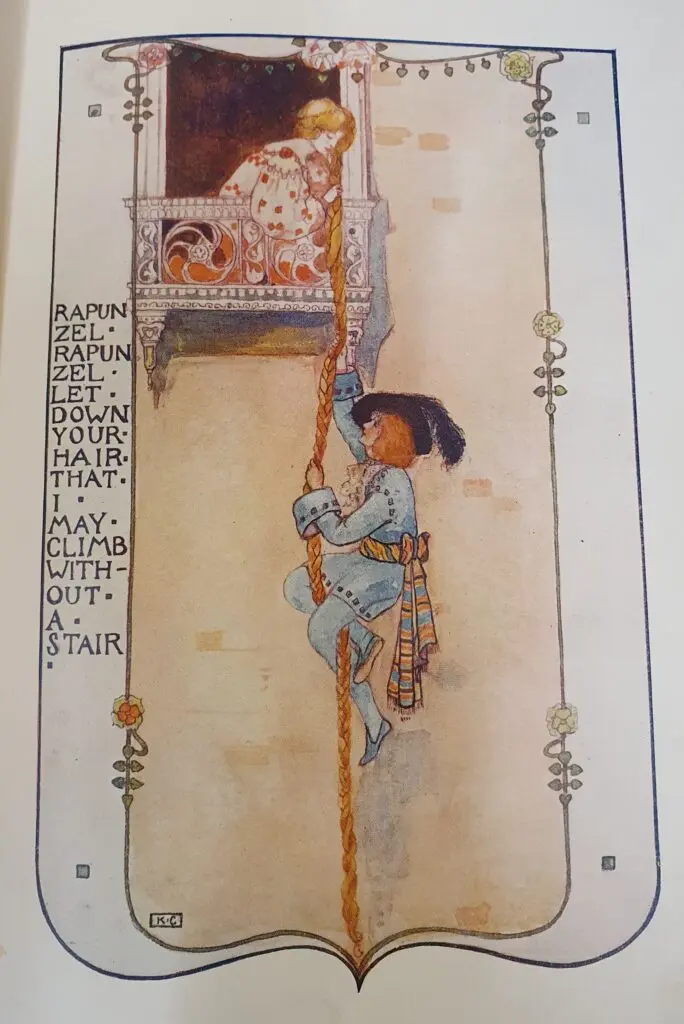
Illustration from In fairyland : tales told again by Louey Chisholm and Katharine Cameron (illustrator) (1904) DcJ 410
Many of the stories written down by those such as Jacob and Wilhelm Grimm were collected from diverse sources and countries and were once transmitted orally down the generations; composed, amended and expanded by women and men, many of whose names have been lost. The continued appeal of these tales can be ascribed to their enduring themes of love, good triumphing over evil and overcoming obstacles with the use of wits, kindness, magic, or all three!
The display is a fraction of the fantastical tales to be found nestling on the library shelves but features some beautifully-illustrated books from the vintage children’s collection; insightful analysis of the meanings behind the tales from our literary criticism section and books by 20th century authors who have retold certain tales or taken inspiration from them. We also have CDs of “fairy tale” music, such as Tchaikovsky’s “Sleeping Beauty”; Bartok’s “Bluebeard’s Castle” and Stravinsky’s “Firebird” as well as audiobooks. We hope you enjoy exploring the collection and please remember not to accept gifts from strangers; be careful what you wish for and always trust a talking cat!

Illustration from The lilac fairy book by Andrew Lang (ed.) and H. J. Ford (illustrator) (1910) DcJ 4821